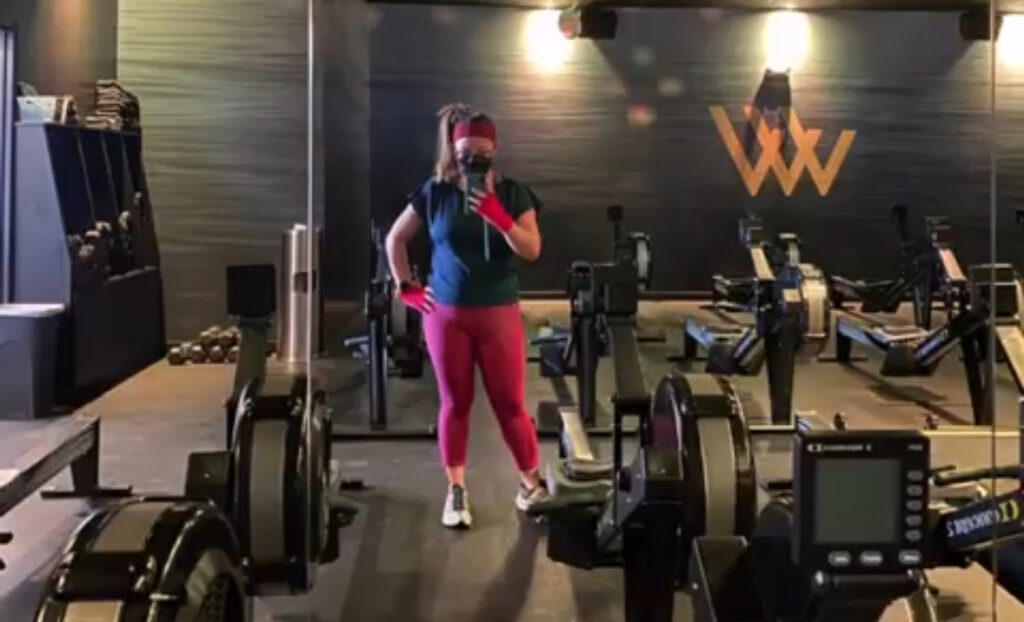
Some people are content working out by themselves, but I learned early in my 20s that I’m not that kind of person. I’m motivated by other people’s energy.
As the pandemic restrictions started easing in 2023, I found myself wanting to try something new to get back to a workout routine. I didn’t feel comfortable returning to my pre-pandemic go-to sesh, Krav Maga, because of the proximity I needed to be with others. Plus, I wanted a low-impact workout due to prior injuries. So, I re-upped my ClassPass, checked out the studios in my neighborhood, and found the Row House.
I checked Row House‘s website, and they claimed that the benefits are “backed by science and data, the benefits of rowing are unparalleled. Each workout produces maximum results by engaging over 86% of your body’s muscles (legs, core, arms, back), delivering the perfect balance of aerobic endurance and muscular strength all in one workout.” This page convinced me to give it a try.
The only other time I’ve used a row machine was at a Crossfit class, and rowing wasn’t always part of the WOD. I figured, “I’ve done it before, I should be able to handle it now.” I booked a Full Row class, which is their cardio endurance workout, and it didn’t disappoint.
The staff at the Row House were welcoming and gave me a tour of the studio. I met the row coach, who explained the Concept2 row machine, helped me get situated, and set up the machine. She also explained certain terminologies like catch, erg, strokes, stroke rate, split time, drive, finish, and recovery. If you’re interested to learn lingo, this website is helpful.
The studio also has weights and bands. Recently, they added exercise balls to certain workouts. But since I booked a Full Row class, I didn’t need any of it. In Full Row, you’re on the row machine, I want to say about 95% of the time. The other 5% is a mini break in between to stretch before getting back on the erg.
After the 45-minute workout, it dawned on me that the way I rowed in CrossFit was incorrect. I had incorrect form; I wasn’t using my legs to their full potential, and at times, flailing my arms up and down instead of just pulling back. The Full Row was challenging and piqued my curiosity about how the other classes are taught.
Since that first class, I chose to keep rowing and became one of my staple post-pandemic workouts. Here are my whys:
- It is truly a full-body workout. Whether you try a Full Row, a Signature, or a Restore class, you’ll get the full body, low-impact movement that you need. I plan to write a separate post about the other classes and which one is my favorite.
- The coaches are knowledgeable and encouraging. I accomplished my rowing goals thanks to their constant motivation, especially when they could see I was about to hit a milestone in my rowing journey. Side note, you get a milestone shirt once you start reaching certain meters, such as 50k meters, 100k meters, and so on.
- I found a great community at the Row House. My workout buddies are friendly. They’re genuinely happy for anyone when another rower hits a milestone.
Should you decide to give indoor rowing a try, here are my recommendations:
- Legs – body – arms – arms – body – legs = That’s how I memorized my body movement should be while rowing.
- Legs are your power. Don’t be afraid to use them.
- Wear workout gloves. Although you don’t death grip the handle, you can still get calluses on your hand.
- It’s not necessary, but wear shoes that connect best with the foot plate. Avoid wearing sneakers with thick cushions. I wear low-top Converse when I row. When I changed my shoes, my split improved, and the entire bottom of my feet can feel the foot stretcher more. The crew can tell it’s my go-to shoes because of the permanent mark on my Converse from the foot straps. You’ll see why in my featured photo of this blog.
- Some rowers bring their seat cushion, especially if they’re doing full row or if the studio has challenges that require you to row for more than 45 minutes. For example, at least once a year, they host a half-marathon. You’d need to be as comfortable as possible, as it could take a few hours to reach the finish line.
- Visit Row House’s page specifically written for first-timers.
If you’re like me, who tends to give yourself a hard time if you don’t do it correctly on your first try, here’s my take on how to prepare for your first indoor rowing class:
- It might take a sesh or two to get the body mechanics. Don’t get discouraged as most workouts take practice. I still tell myself that to this day.
- Avoid “competing” with other rowers. My eyes tend to wander, and I end up looking at my neighbor’s screen. Then, my ego starts taking over. “Why can’t I go faster than her? Why is his damper all the way up to 8?” It’s good if you want to challenge yourself by pretending to row against another rower, but not at the expense of the quality of your form, or potentially get injured. The studio would sometimes have rowing contests, and that’s when I tap into my competitive side.
I’ve been rowing for about two and a half years now and have finally hit ONE MILLION METERS! I’m so proud of this accomplishment. It was definitely trying to earn this gray shirt, having to pause my membership most of last year due to work injuries and work travels. Whenever I wear it, it feels like a badge of honor.

What’s next on my rowing sesh? I signed up and finished my first half-marathon, which coincides with The Regatta. It’ll be exhausting, tiring, and extra sweaty. The crew believes I can get to that finish line in the allotted time given, which I believe is 3 hours. I’d have to buy the seat cushion to save my tush. I’ll have a separate blog about my first half-marathon sesh soon!
Happy rowing sesh, friends! Stay active!
Pingback: I got to taste the new viral workout, Hyrox - Sesh & Wander